How to Keep Adult Beetles
Everything you need to know about housing, feeding, and caring for adult beetles — stag beetles, rhino beetles, and flower beetles. A complete beginner's guide.
Housing & Enclosure
Adult beetles need a simple setup — a container with substrate, something to climb on, and food. The container just needs to be slightly wider than the beetle's body length so it can turn around comfortably.
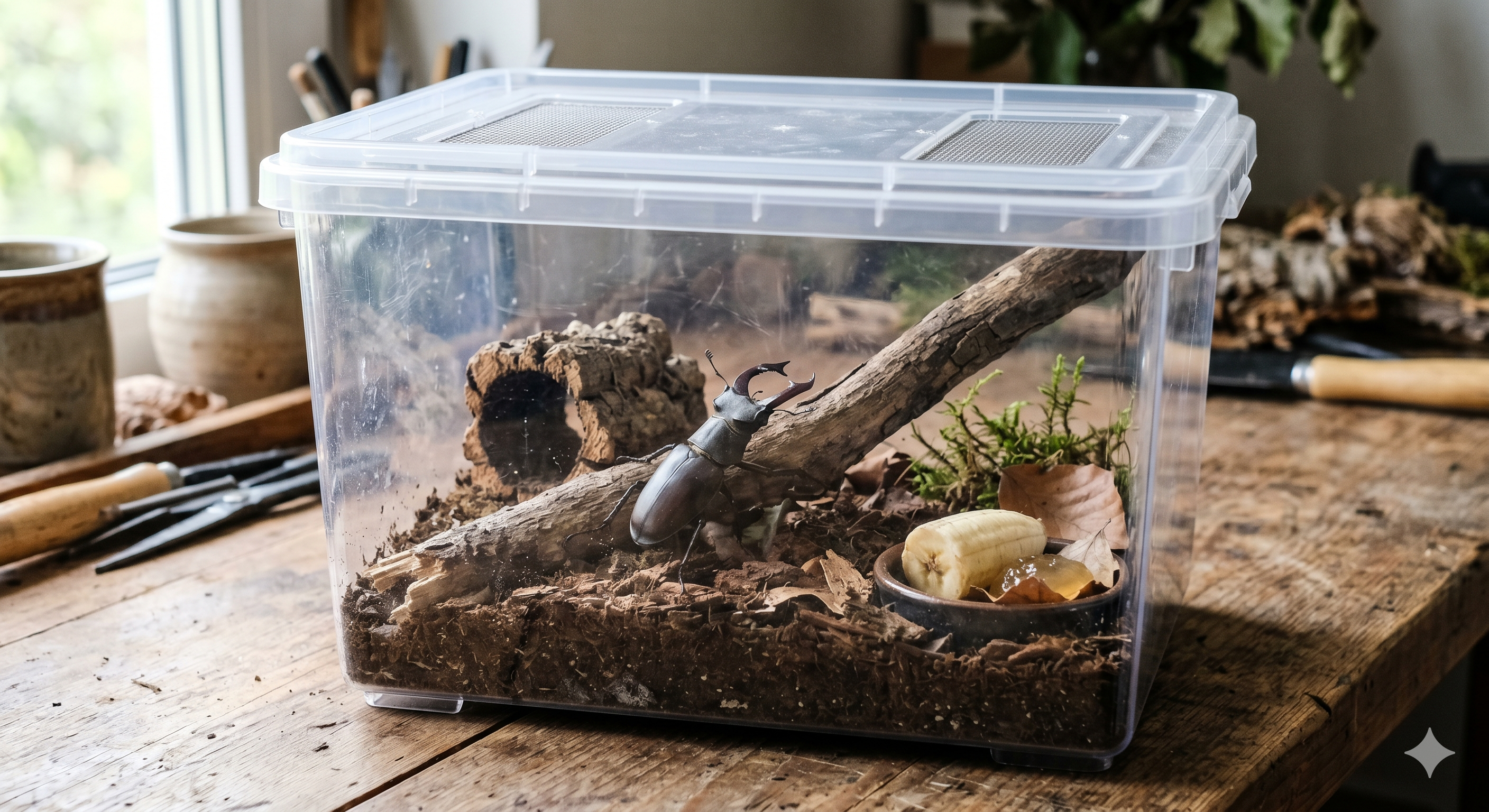
Example setup — container with substrate, climbing bark, hide spots, and food
What You Need
- Container — plastic box, acrylic case, or glass tank with ventilation holes. Clear is better so you can observe.
- Substrate — wiping paper (tissue/kitchen paper), sliced sawdust, or sphagnum moss. Keep it clean and simple.
- Climbing objects — bark, sticks, or small branches. Beetles can die if they flip over and can't right themselves.
- Hide spots — pieces of bark or cork bark for beetles to hide under during the day.
- Food dish — a small shallow dish or beetle jelly cup holder.
Do NOT use coconut fiber (coco coir) as substrate for adult beetles. The big, rough pieces can get caught in their legs and joints, causing injury. Stick to wiping paper, sliced sawdust, or sphagnum moss.
Always add climbing objects like sticks and bark. If a beetle flips on its back and can't grab anything to turn over, it will exhaust itself and die.
Temperature & Humidity
Each beetle type has a different preferred temperature range. Avoid direct sunlight — beetles cannot regulate their body temperature and will overheat.
Temperature Guide by Type
These are general guidelines — not all species within each type have the same requirements. Always research the specific species you're keeping for the best results.
How to Maintain Humidity
Mist the substrate with a spray bottle every 1-2 days. The substrate should feel slightly damp but not wet or muddy. A simple test: squeeze a handful of substrate — if a few drops come out, the moisture is perfect. If water streams out, it's too wet.
Too wet = mold and bacteria growth, which can harm your beetle. Too dry = beetle dehydrates. Aim for "damp sponge" level moisture.
Feeding
Adult beetles eat tree sap, honey, and fruit in the wild. In captivity, the best natural food is honey — it's nutritious and beetles love it. Fruit is a good second option, and beetle jelly is the most convenient choice for easy maintenance.
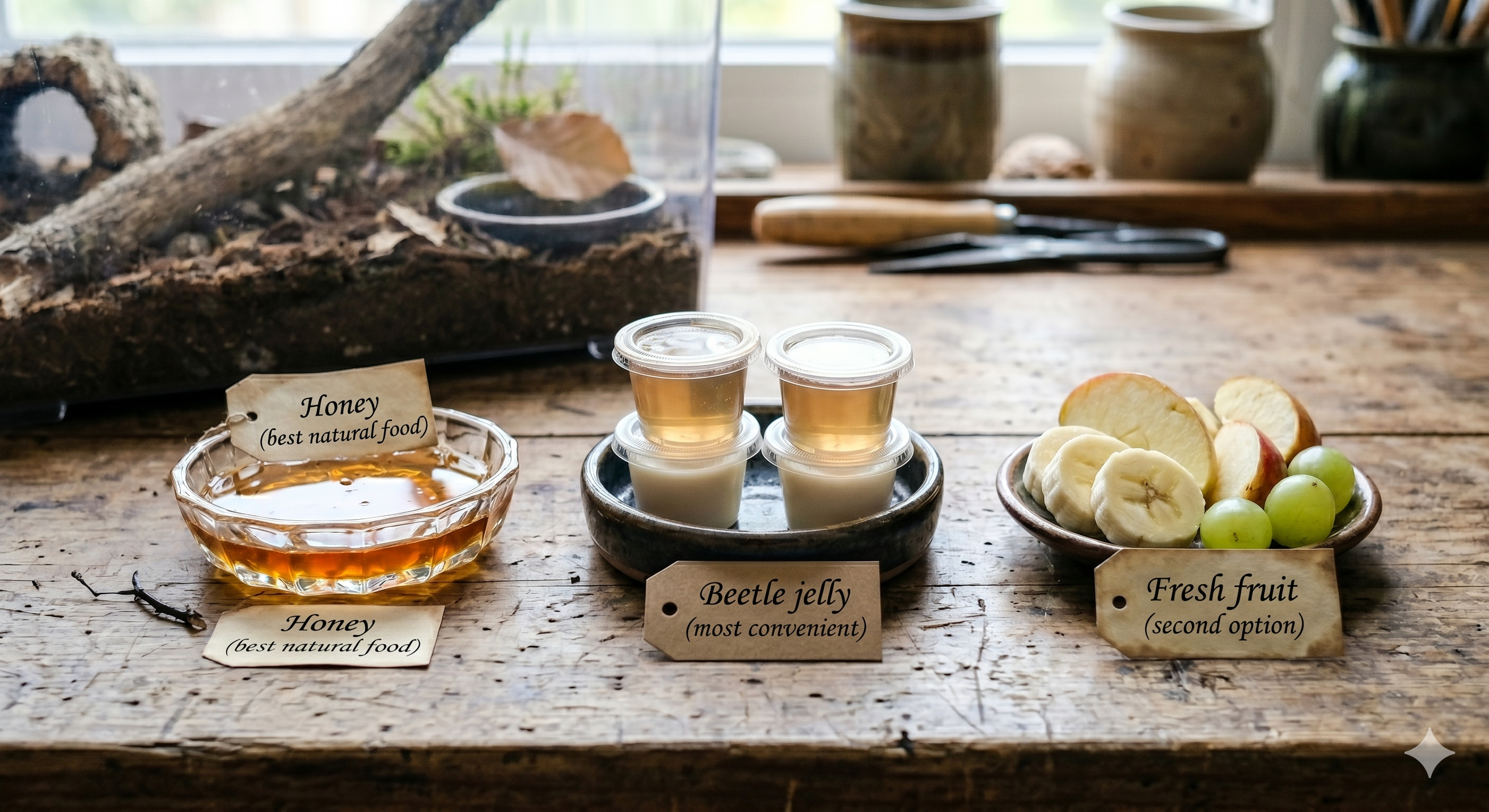
Best food options — Honey (best natural food), Beetle Jelly (most convenient), Fresh Fruit (second option)
Best Foods
- Honey (best natural food) — high nutrition, natural, and beetles love it. Mix with a little water to thin it out and serve in a shallow dish.
- Beetle jelly (most convenient) — balanced nutrition, long lasting, easy to use
- Fresh fruit (second option) — banana, apple, grape. Fruits work well but require more frequent cleaning and attract fruit flies.
You do NOT need to provide water — beetles get all the moisture they need from food and substrate.
Weekly Care Schedule
Adult beetles are low-maintenance. Here's a simple weekly routine to keep them healthy:
| Mon | Tue | Wed | Thu | Fri | Sat | Sun | |
|---|---|---|---|---|---|---|---|
| 🍯 Change Food | ✓ | ✓ | |||||
| 👁 Check Beetle | ✓ | ✓ | |||||
| 💧 Mist Substrate | ✓ | ✓ | |||||
| ♻ Change Substrate | ✓ | ||||||
| 🚽 Clean Container | ✓ |
This schedule is just an example — you can pick any 2 days for food/misting and 1 day for cleaning. The important thing is consistency. Most beetles rest during the day and become active at night.
Keeping Males & Females Together
In general, do not keep multiple males together — they will fight, especially stag beetles and rhino beetles. Males can injure or kill each other.
Keeping a male and female together for a long time will shorten both their lifespans — the male will keep mating with the female repeatedly, exhausting both beetles. The best approach is to keep them together for only 1-7 days (depending on species), then separate them.
Common Mistakes
- No climbing objects — beetle flips over and dies
- Direct sunlight — overheats and kills the beetle
- Substrate too wet — causes mold, bacteria, and mites
- Substrate too dry — beetle dehydrates
- No ventilation — stale air causes health problems
- Keeping aggressive males together — fights and injuries
- Using coconut fiber substrate — big rough pieces can harm beetle legs. Use wiping paper, sliced sawdust, or sphagnum moss
- Using pine or cedar substrate — toxic to beetles. Always use hardwood-based products