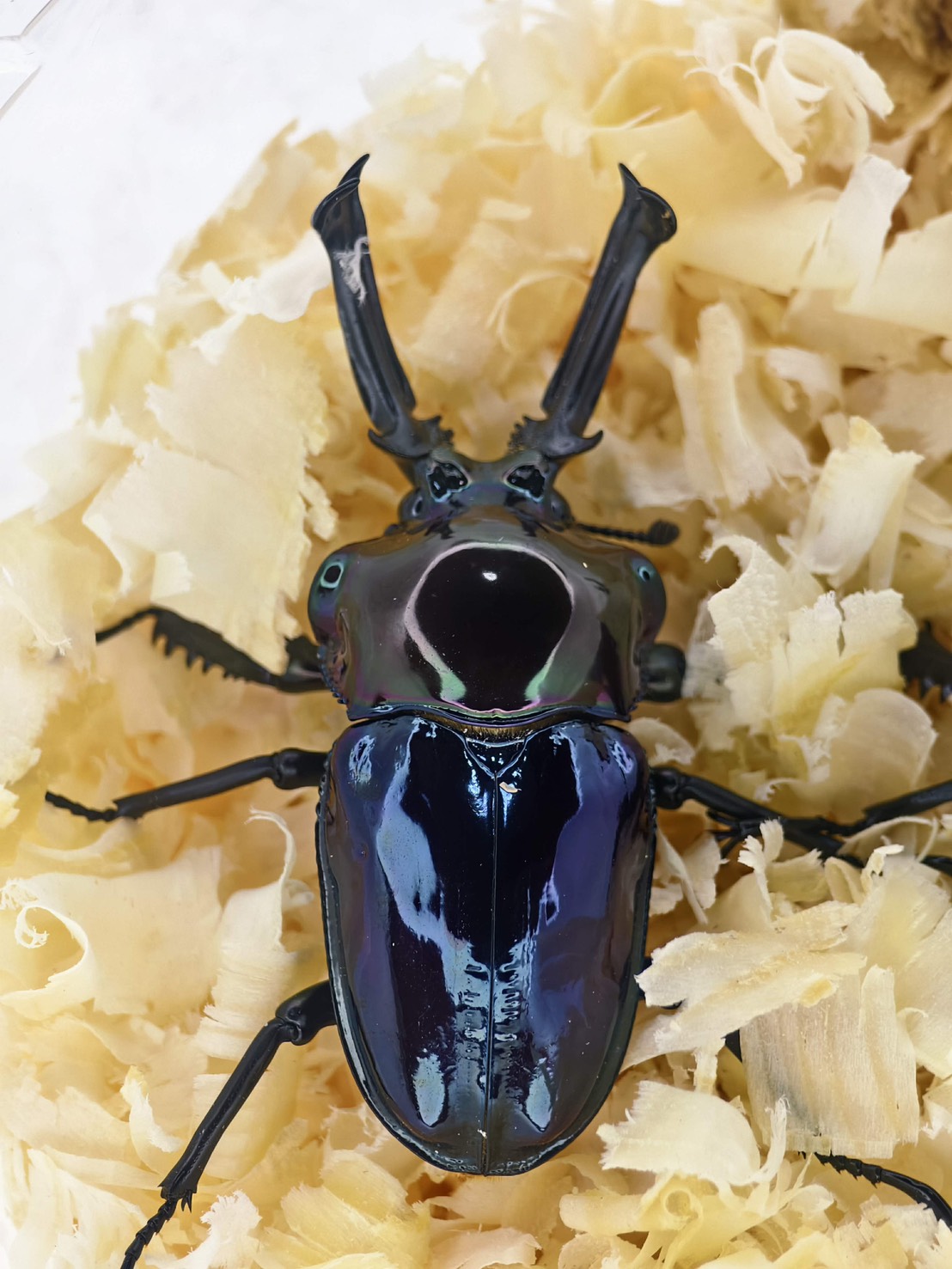
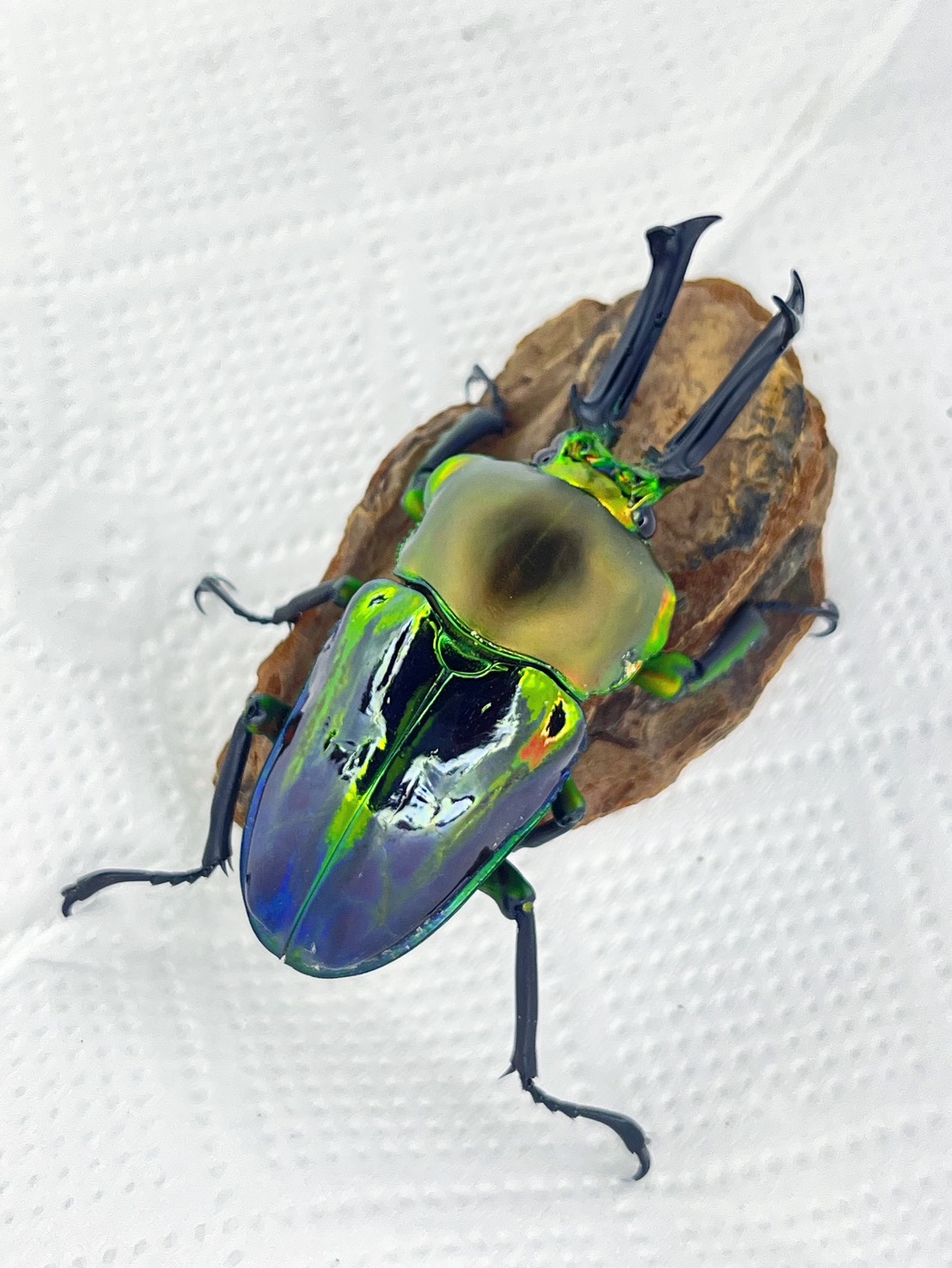
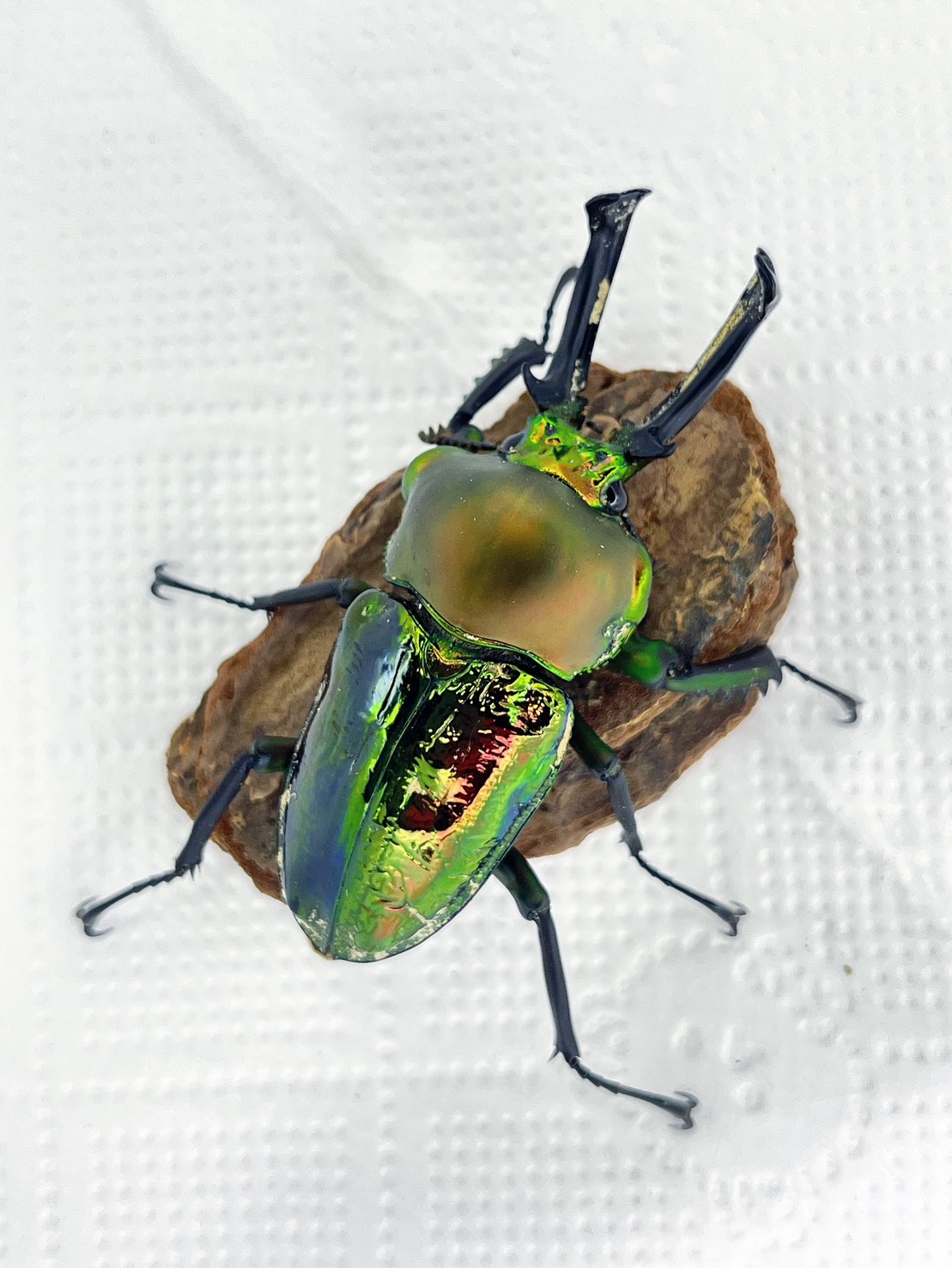
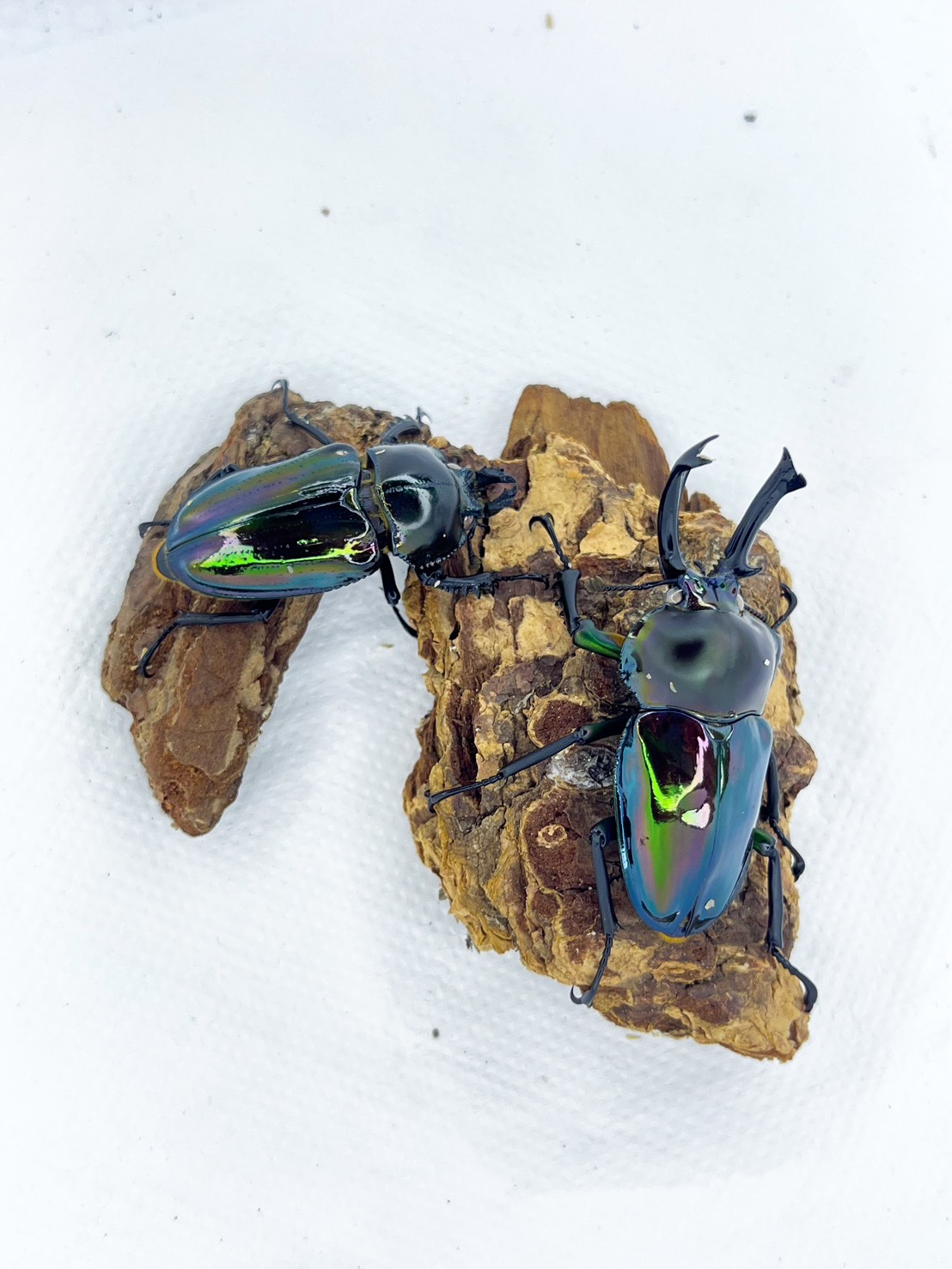
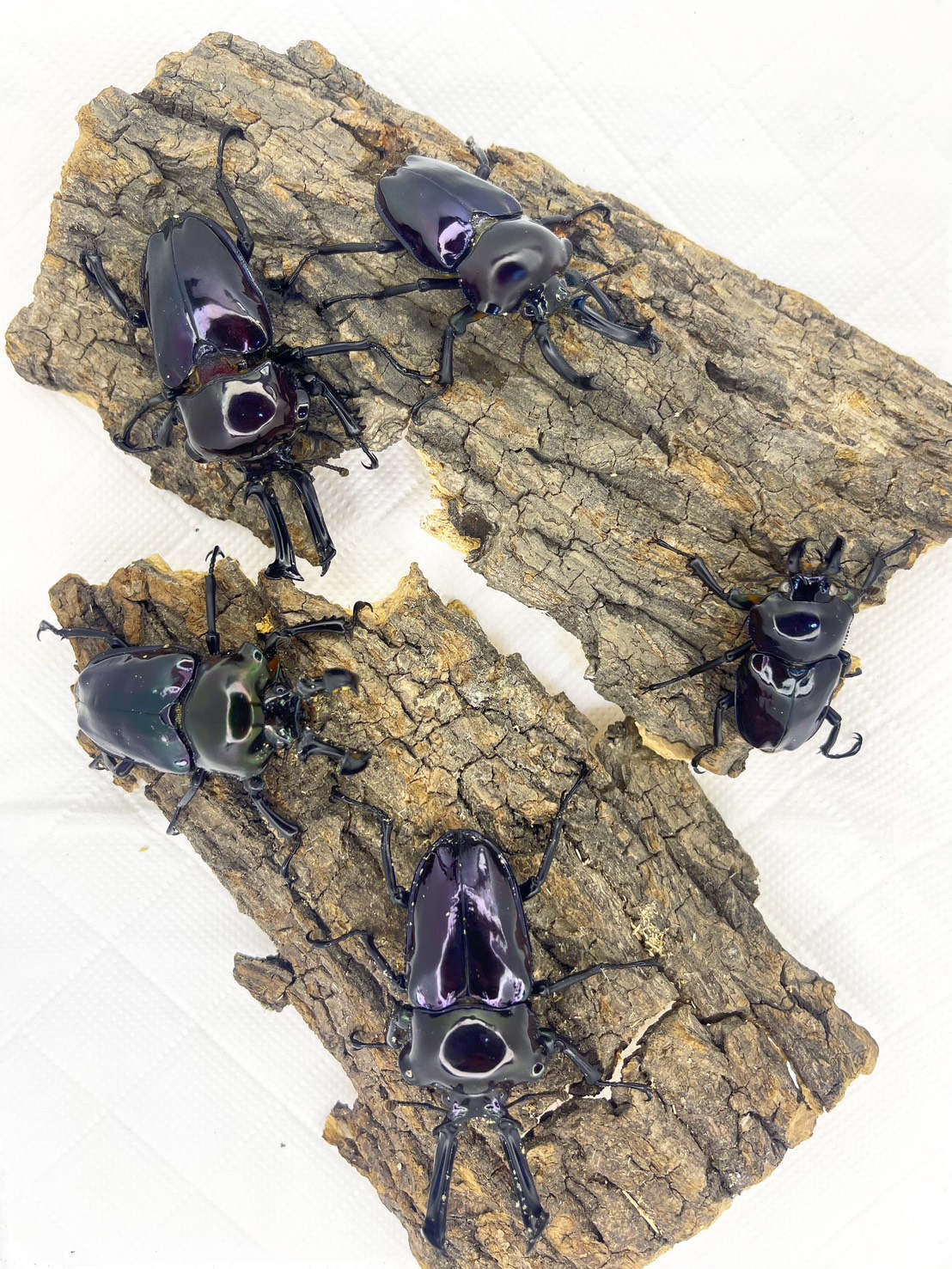
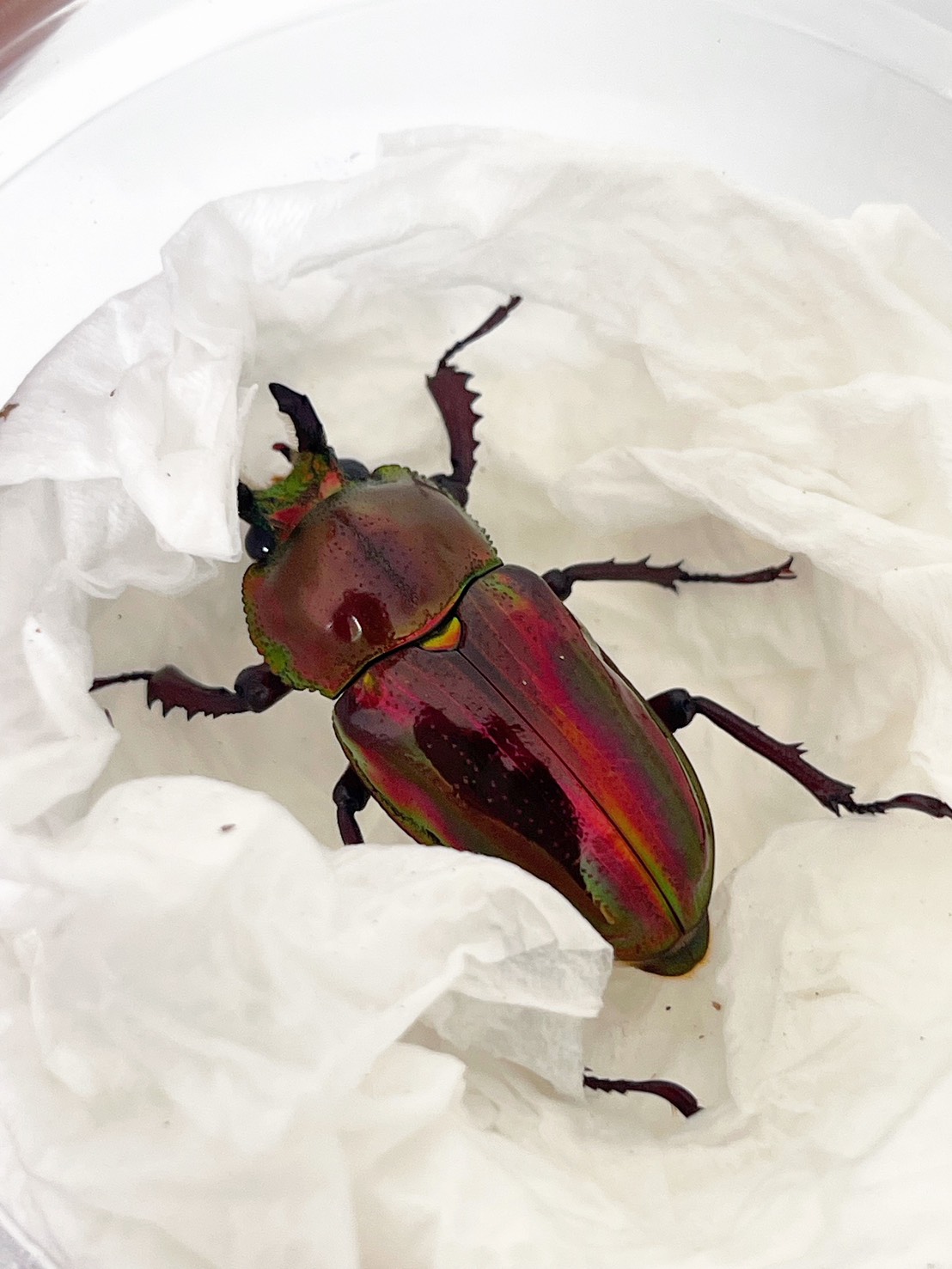
Phalacrognathus muelleri — A comprehensive guide to breeding and developing color variations by JRN BEETLE
Explore Color Variations ▾All color lines originate from the Normal morph — the wild-type red-green iridescent form. Through selective breeding over generations, breeders have developed distinct color lines, each with their own progression path.
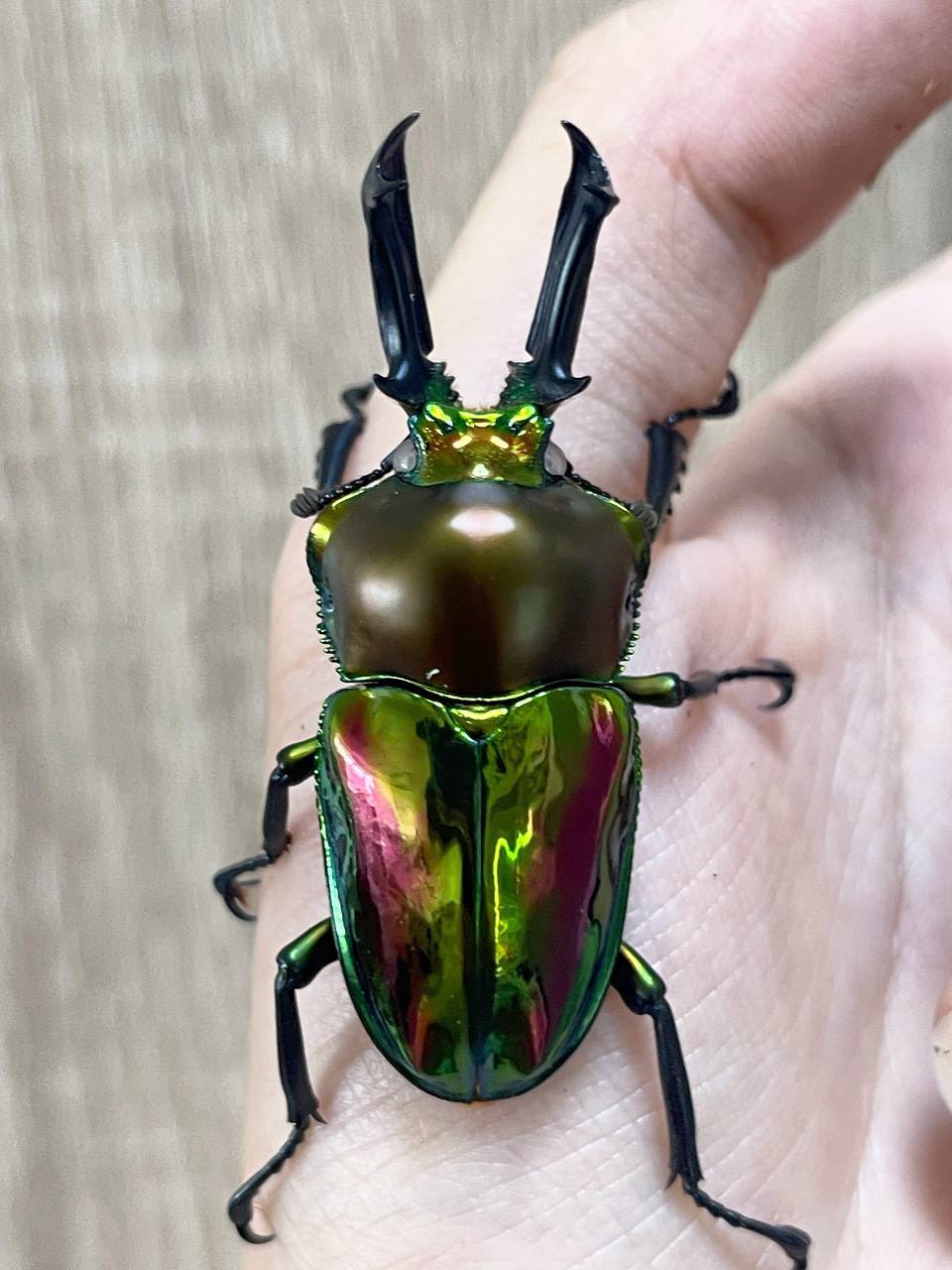
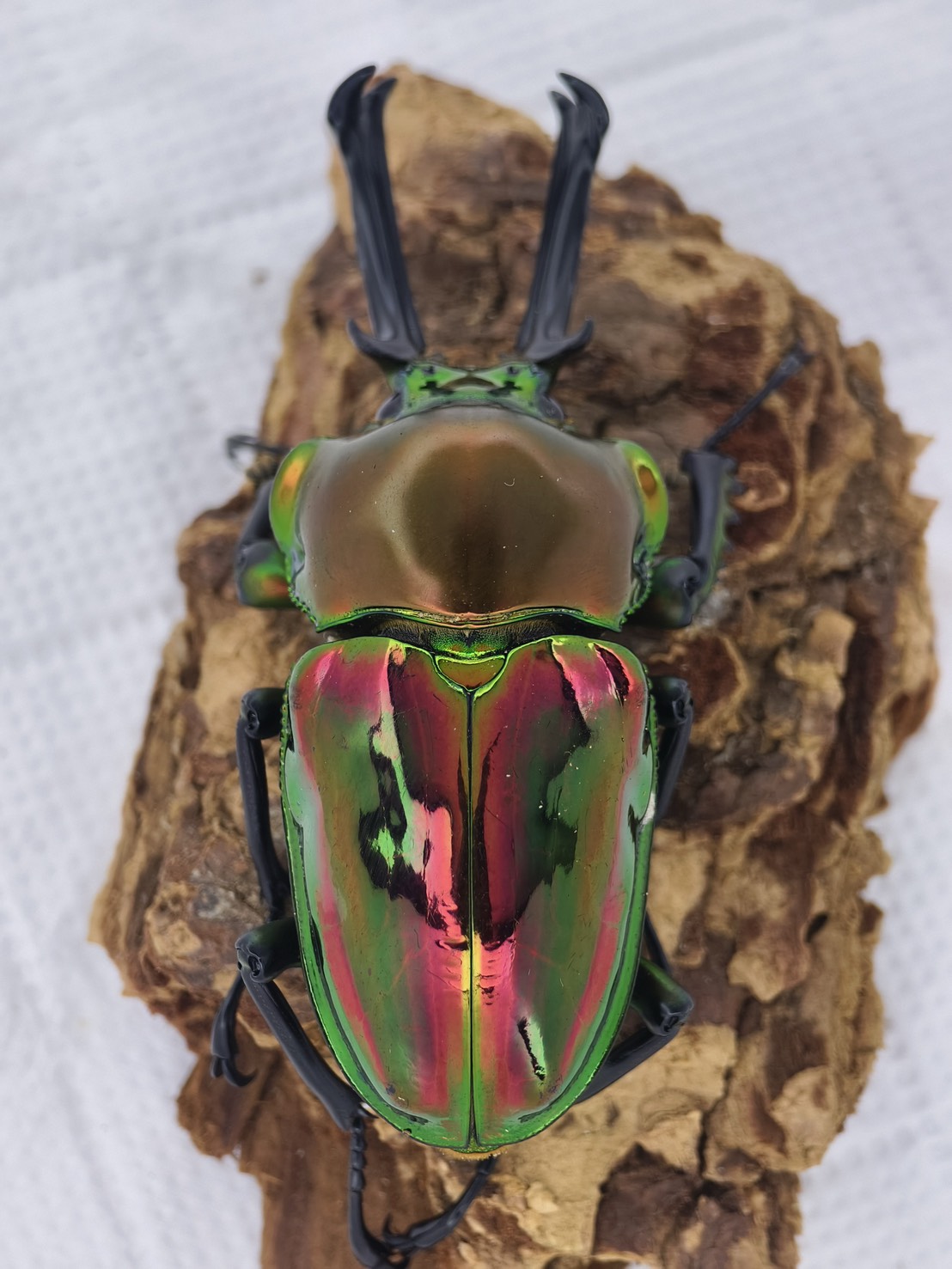
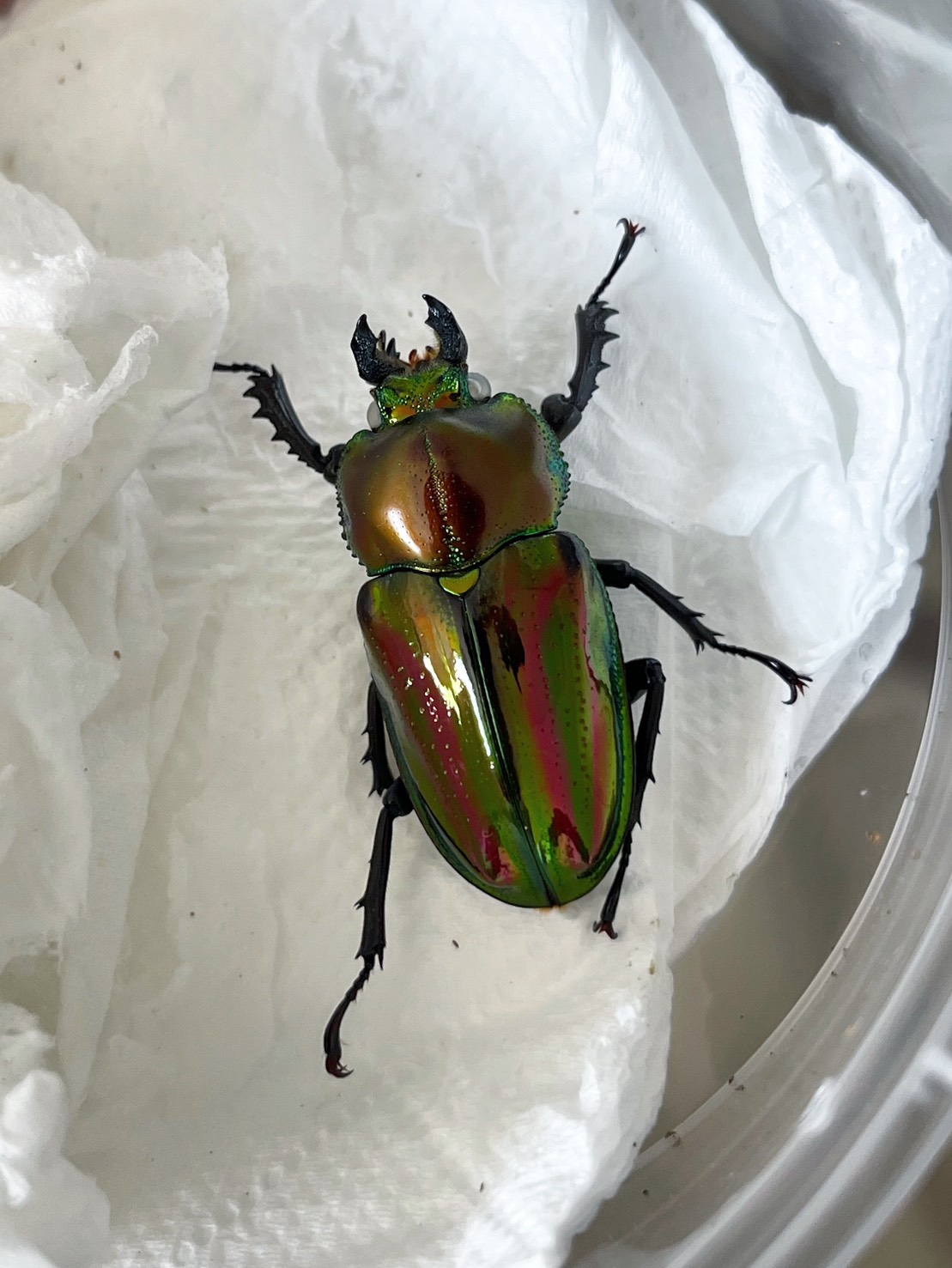
Normal (White Eyes specimen)
The wild-type coloration. Red and green iridescent colors appear simultaneously across the elytra in roughly equal proportion. This is the base form from which all selective color lines are developed.
Normal → Red → Super Red → Amber
Chest Color: Golden
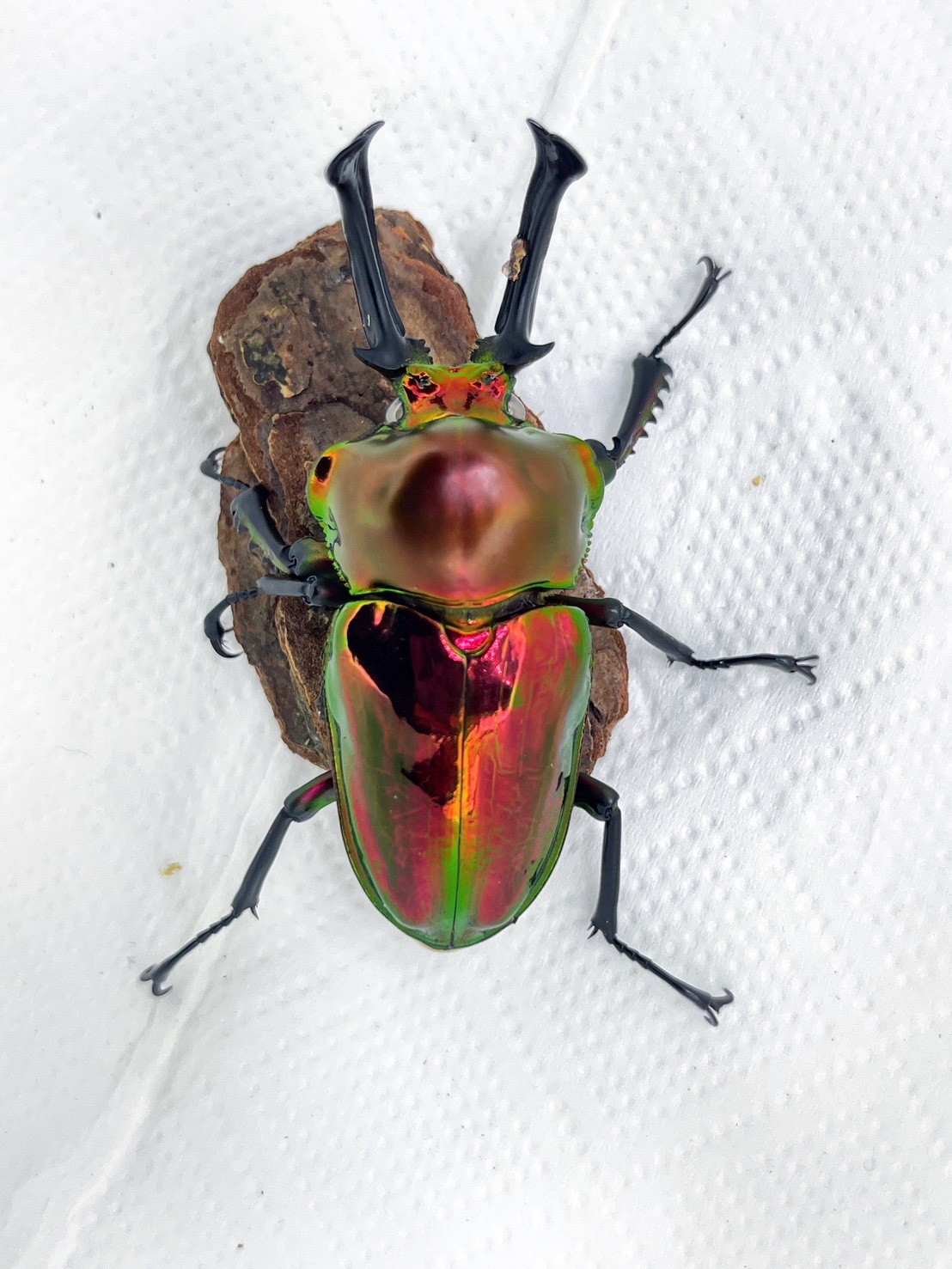
Red
Like the Normal form but with red showing up more than green on the elytra. The first step in the red line development.
Super Red (White Eyes)
Deep red color covers most of the body — including the head, rim of the chest, lower body, and legs. Very low amount of green remains anywhere on the body.
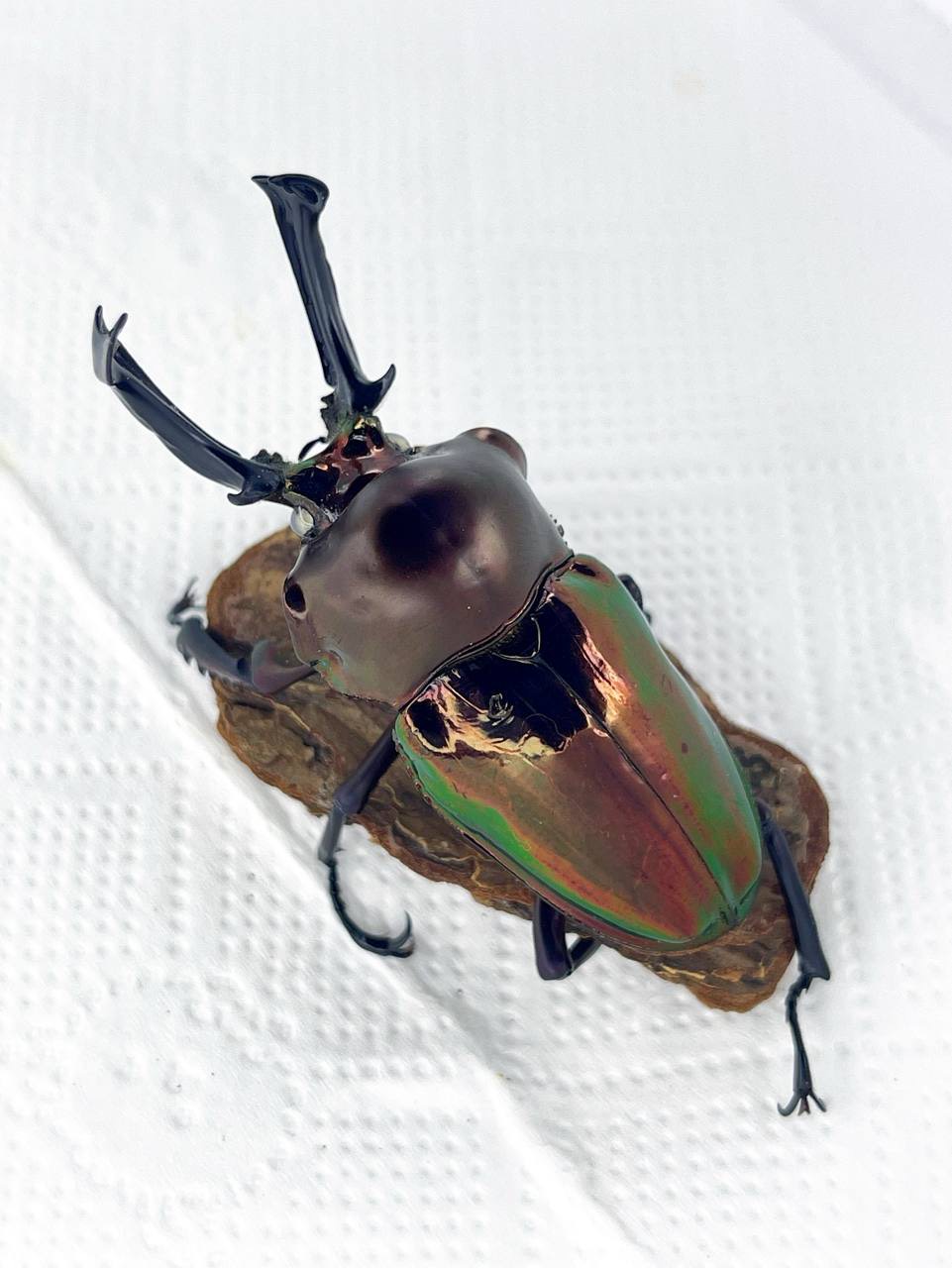
Amber (White Eyes)
Also called "Red Wine" or "Dark Red." The color shifts to a dark brown-red or red-brown tone, resembling the color of red wine. Appearance can vary between dark brown and red-brown tones.
Normal → Green → Super Green → Special Green (Glaze)
Chest Color: Green
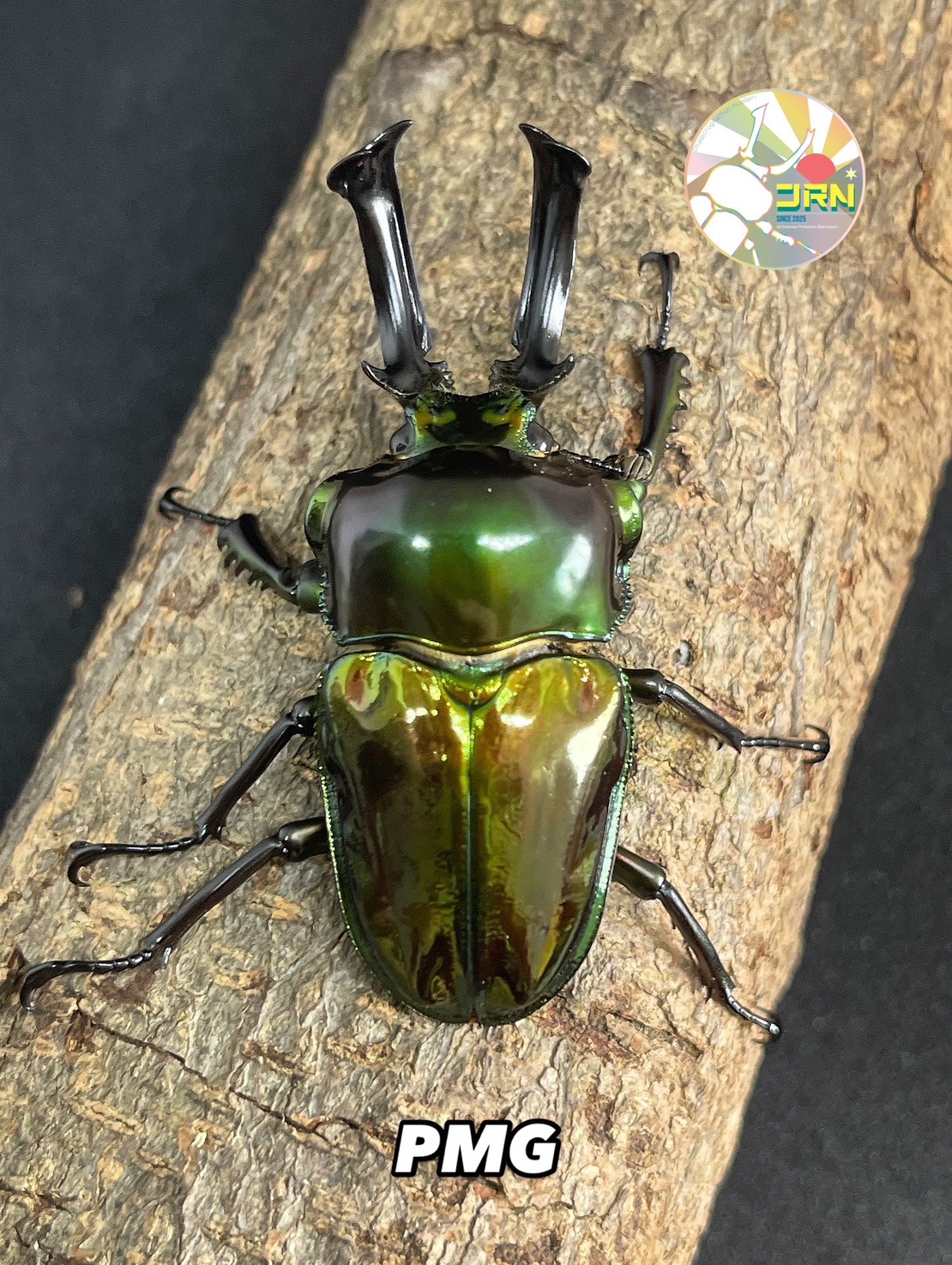
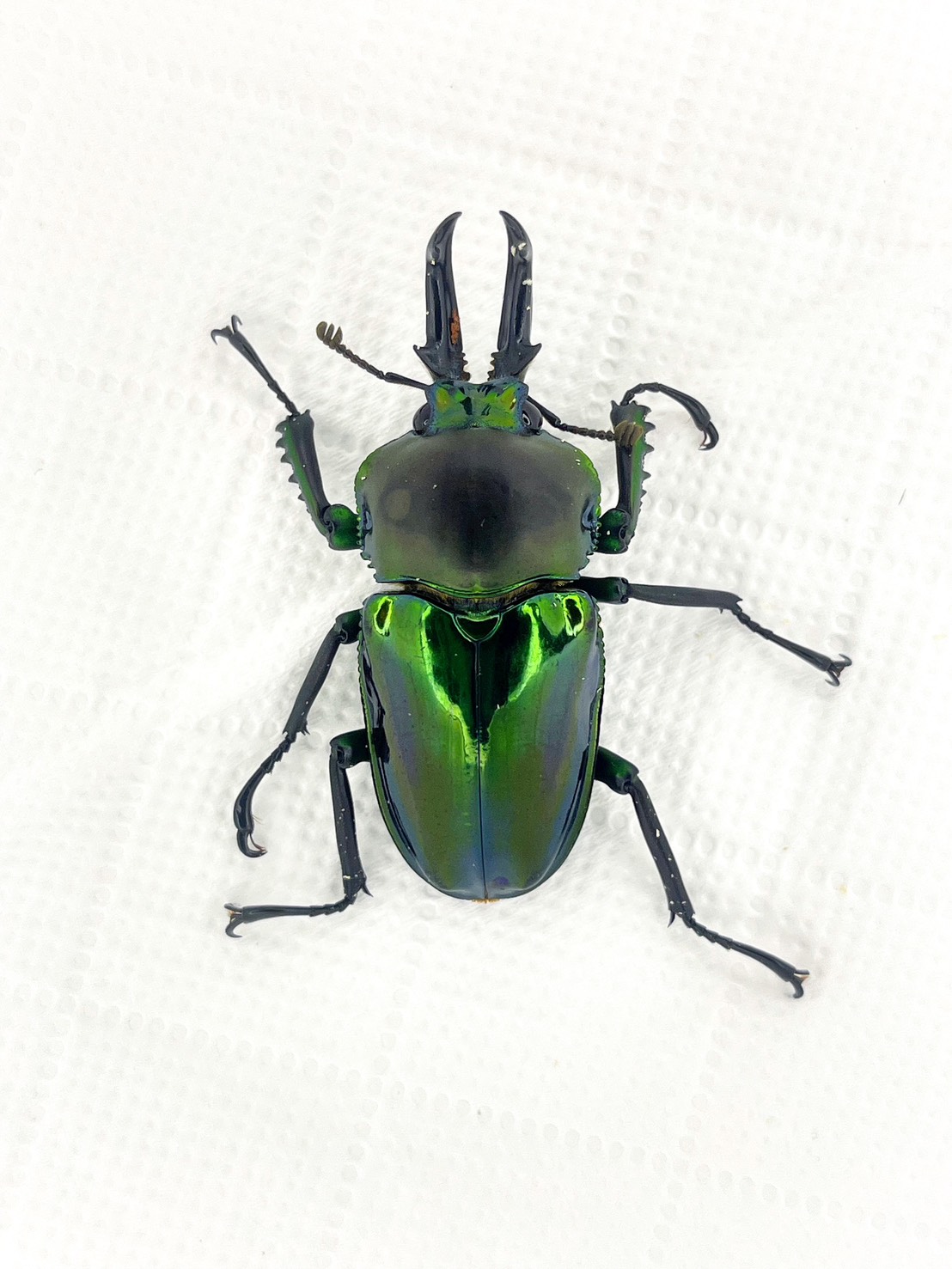
Green line specimen (Super Green Pikal)
Like the Normal form but with green showing more than red on the elytra. The starting point for the green line.
Super Green (Red Eyes — by Takuma)
Same concept as Super Red — green color dominates almost the entire body with very little red remaining. A key stepping stone toward the rarest green morphs.
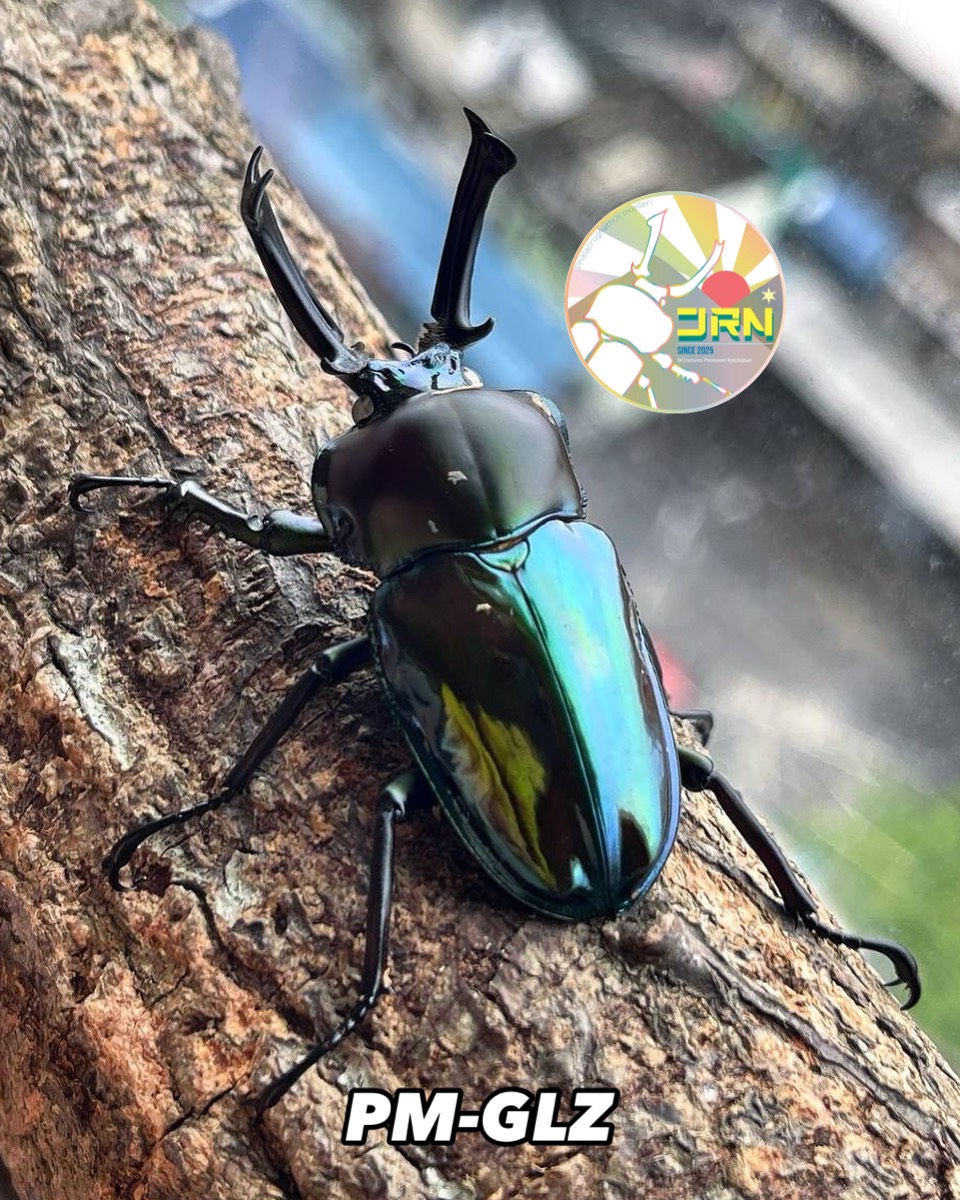
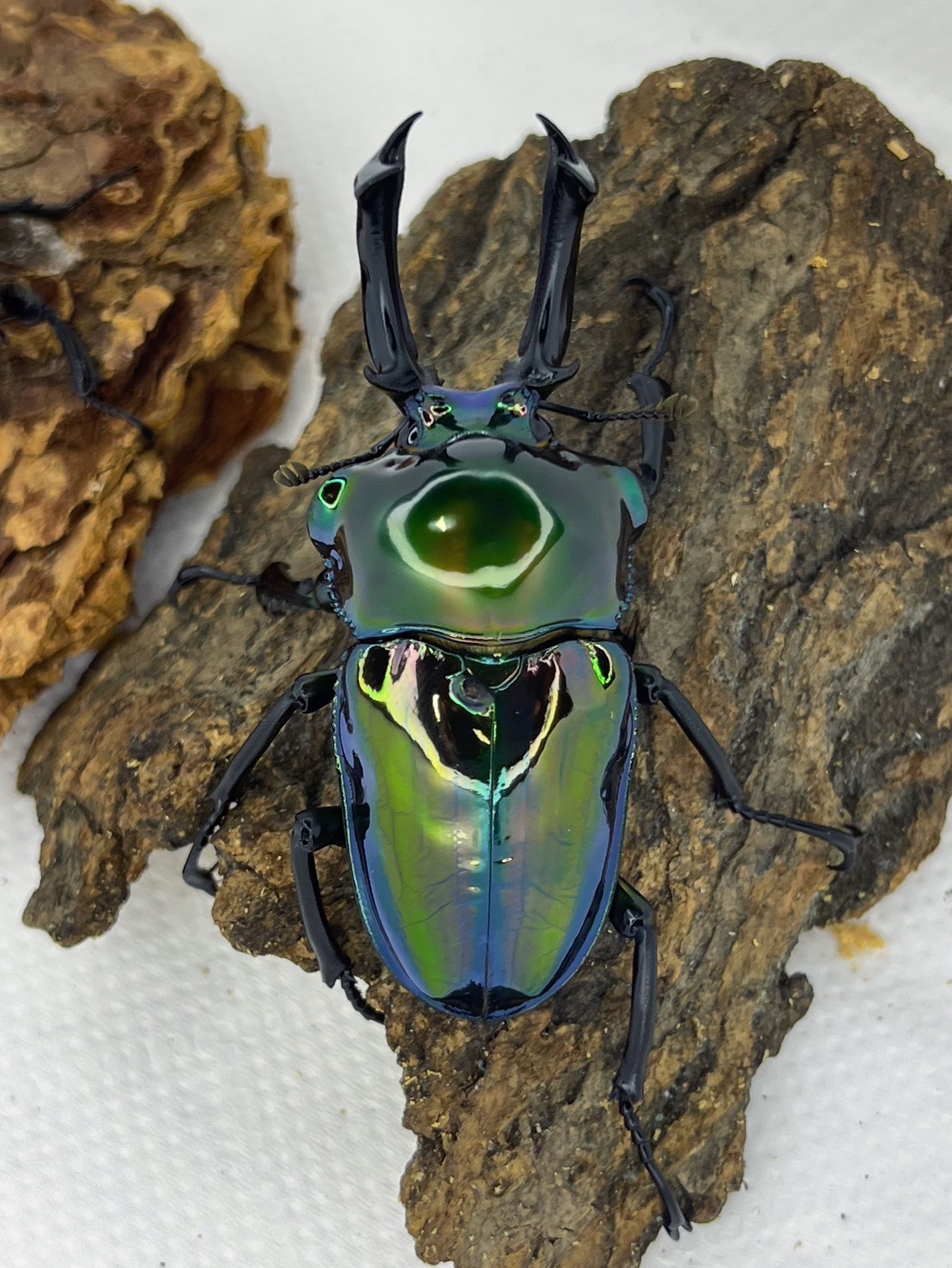
Glaze (White Eyes)
The pinnacle of the green line comes in two styles:
Developed from Green Line → Purple → Navy Blue Purple → Blue
Chest Color: Black or Dark Green
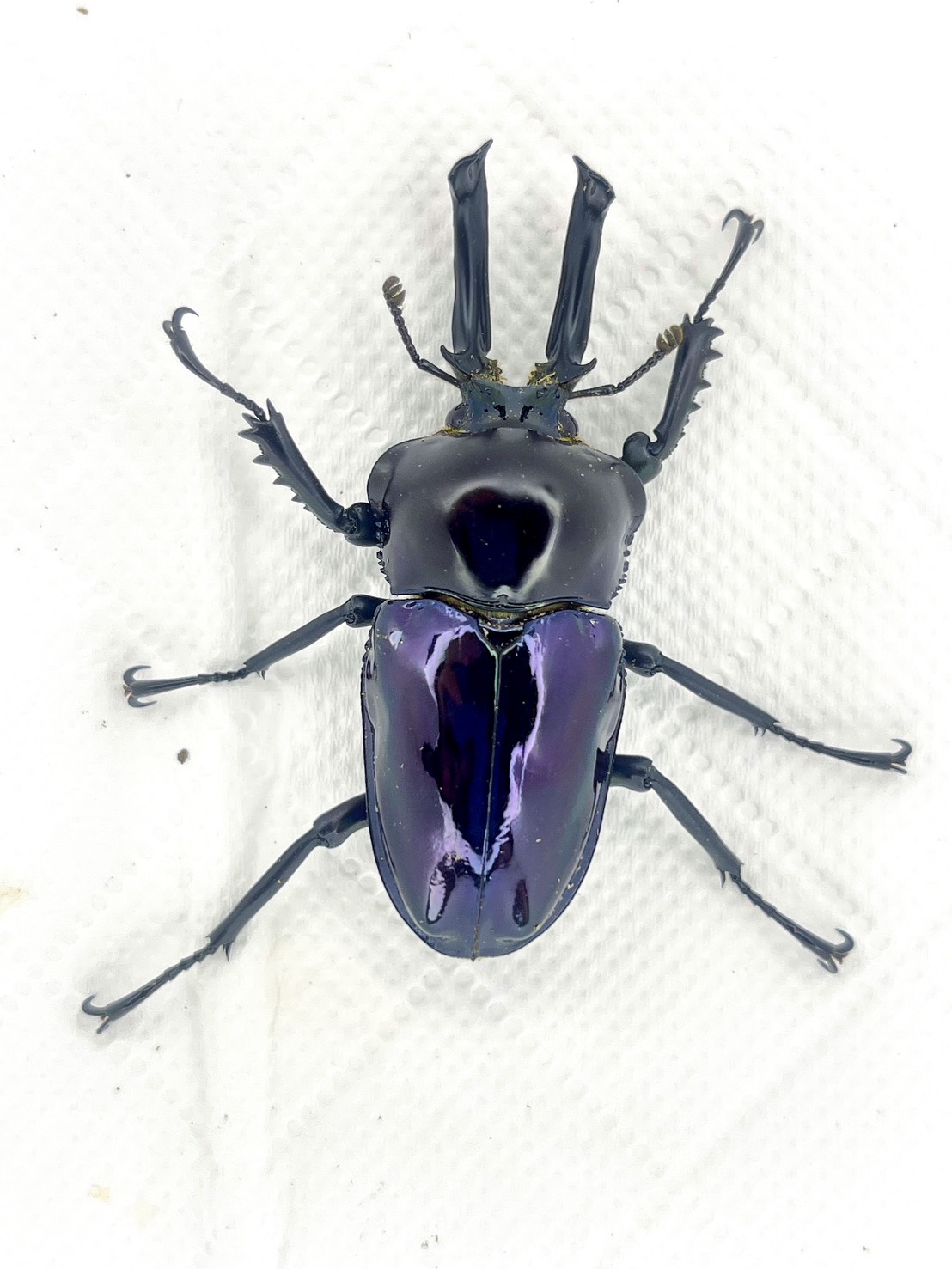
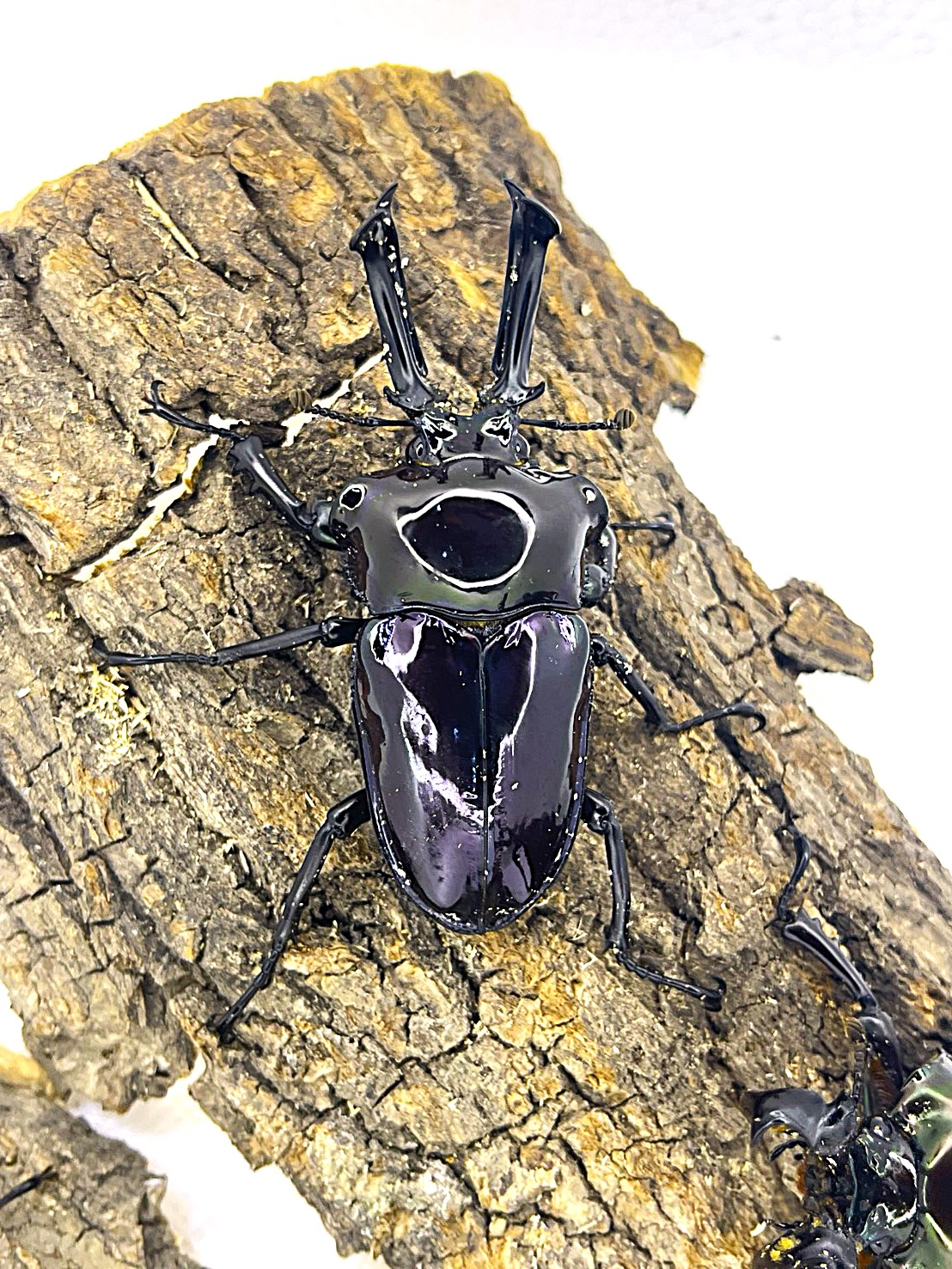
Purple (Red Eyes)
A single-color morph — the entire body displays purple coloration. Developed originally from the green line through selective breeding.
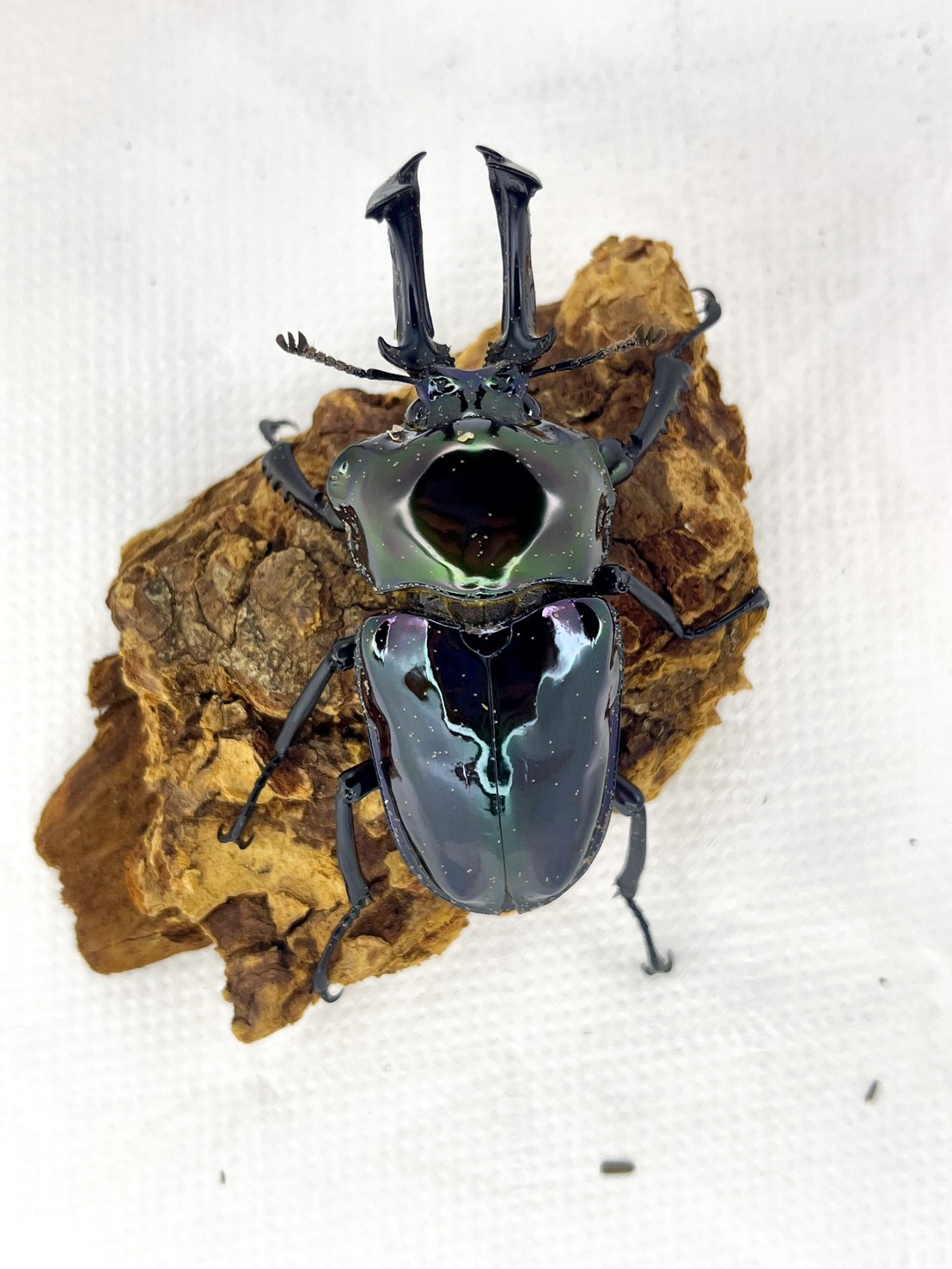
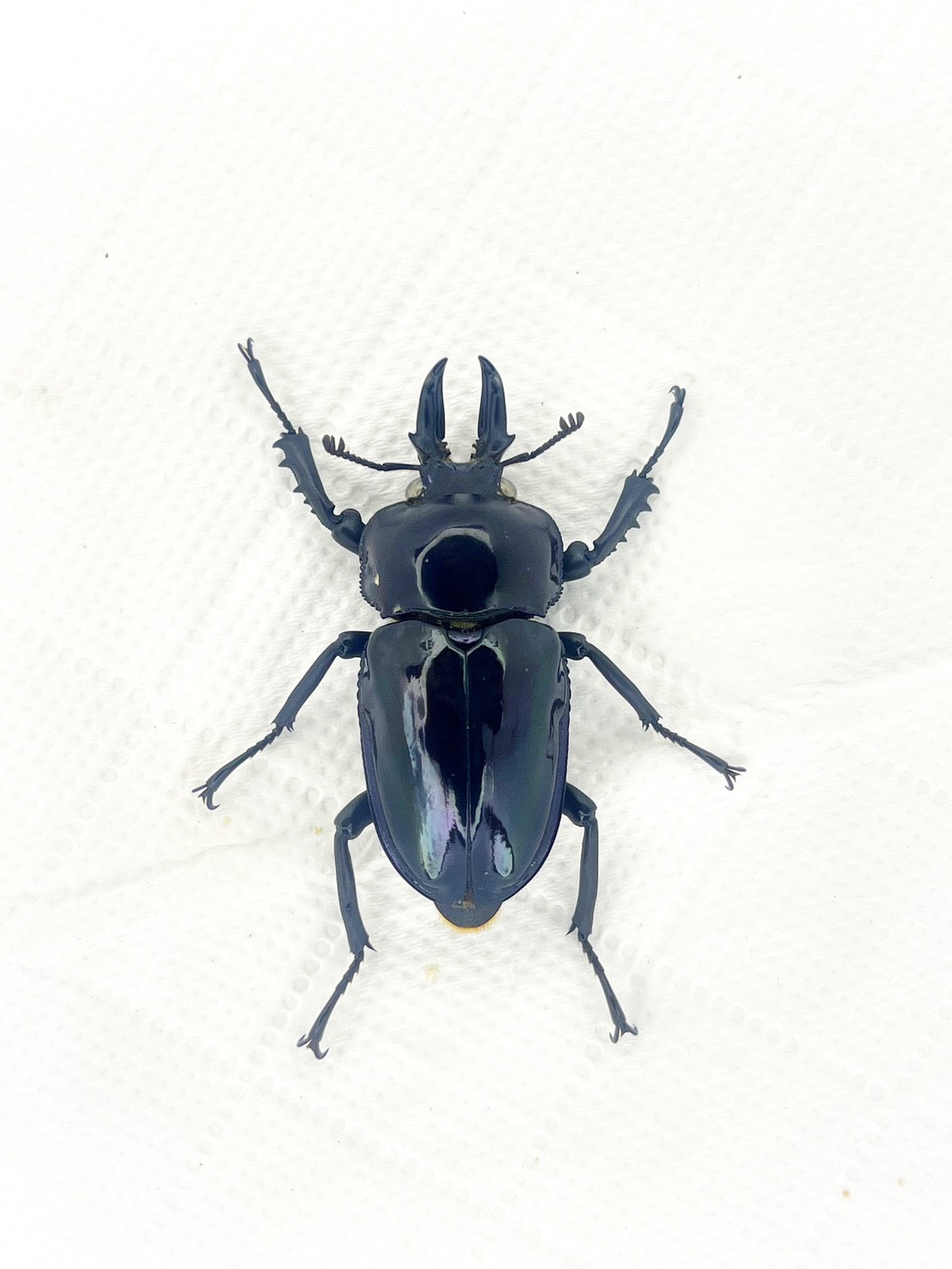
Navy Blue Purple (High Grade)
Both navy blue and purple appear on the head and body simultaneously. The higher the grade, the more navy blue covers the body. A key parent for Aurora breeding.
Blue (Highest Grade)
The ultimate form of the purple line. Through continued selective breeding of Navy Blue Purple, the blue takes over entirely — producing a deep, full blue coloration across the body.
One of the longest development timelines
Chest Color: Matte Golden
Blue Crest — High Grade (Lapis)
A deep, dark blue coloration that takes one of the longest times to develop through selective breeding. Japanese breeders call the highest grade of this color "Lapis" — named after the precious stone lapis lazuli. Features a distinctive matte golden chest.
Blue Crest — Half Color Form
A variation of Blue Crest where the blue coloration is partially expressed, showing a transitional stage in color development.
Cross: High-Grade Green (Glaze/Super Green) × Navy Blue Purple
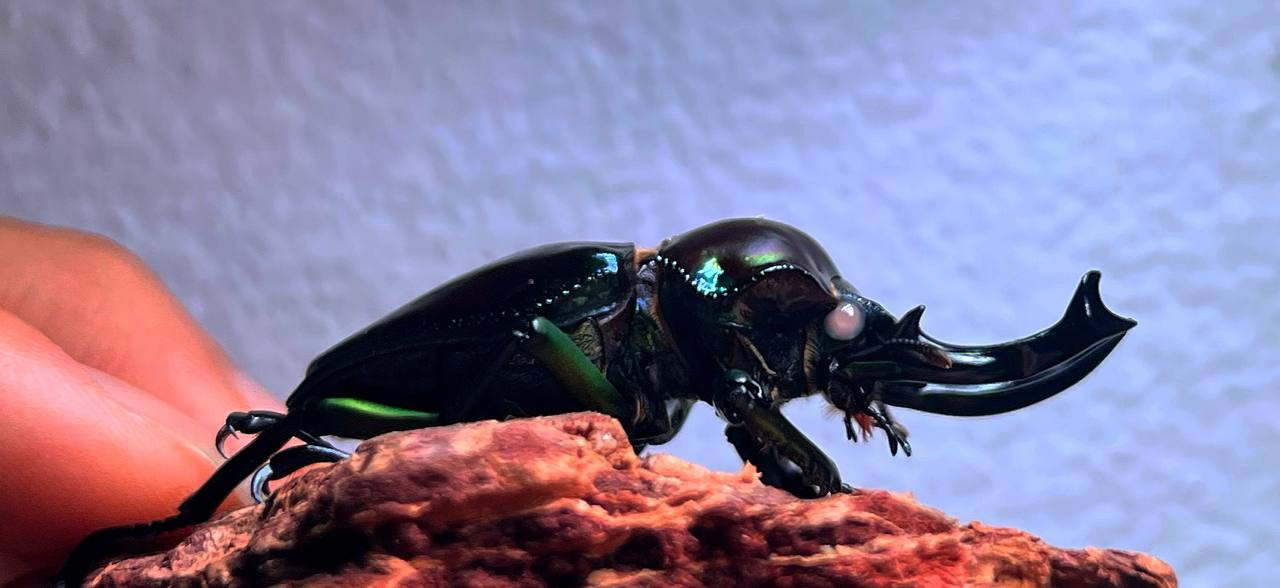
Aurora (Pink Eyes) — JRN BEETLE
The Aurora must display three colors simultaneously on its body:
Aurora Pink Eyes ♂ Close-up
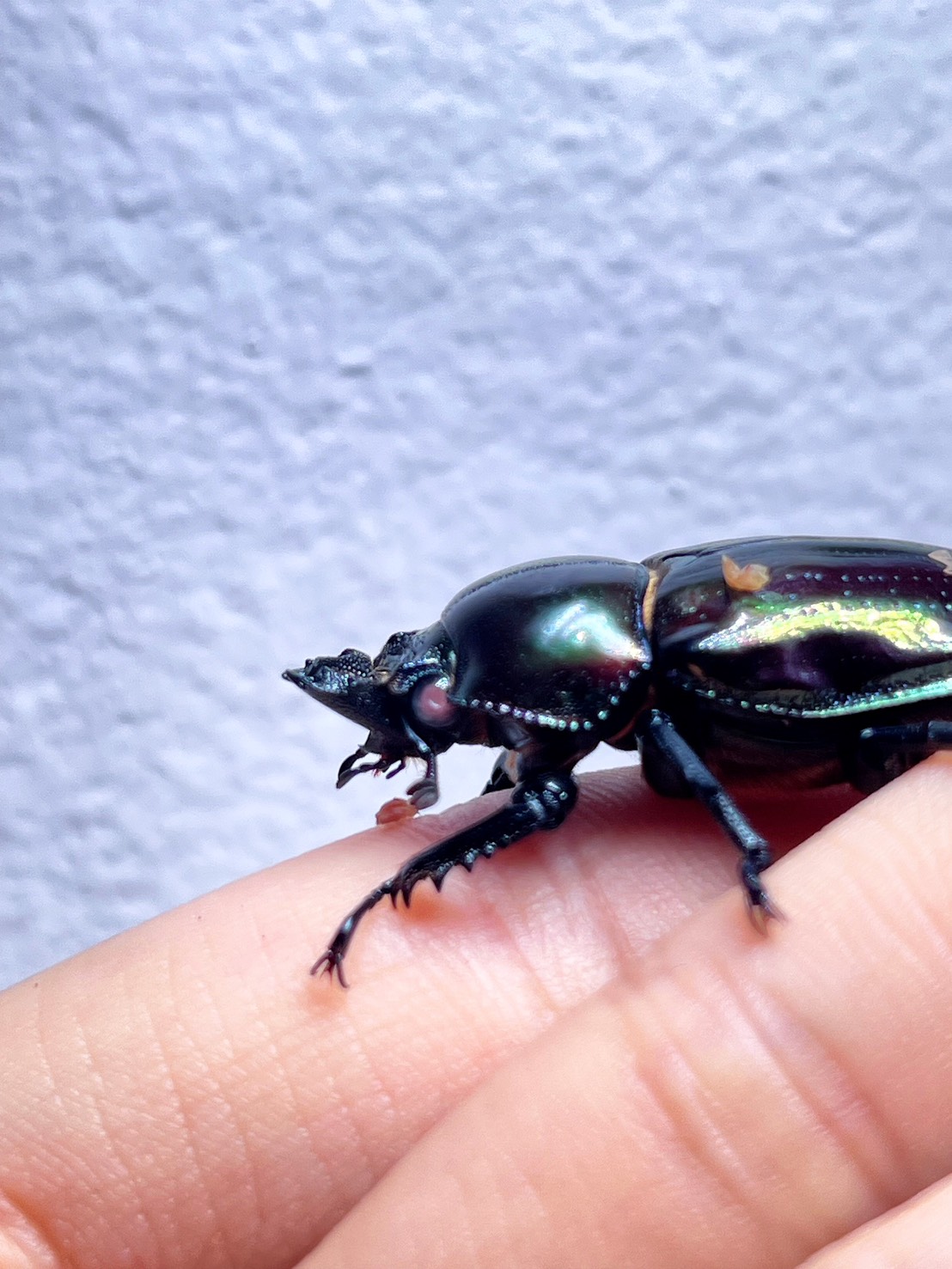
Aurora Pink Eyes ♀ Close-up
First developed by Japanese breeder RTN
Pikal is a special trait — a shiny, metallic chest — that can be combined with almost any color line. Named by their chest color, not their elytra color. Every color variation can potentially have the Pikal trait, except Blue Crest which has not yet been observed with Pikal.
Normal or red color pattern body with a shiny golden chest
Developed by RTN 🇯🇵Green line body with a shiny green chest
Developed by RTN 🇯🇵Purple line body with a shiny purple chest
Developed by Takuma 🇯🇵Pikal can appear in any color variation through selective breeding. Here are some examples:
Highest grade of the Navy Blue Purple Pikal line
Rare genetic abnormalities can produce special eye colors. These traits are extremely rare and highly valued, especially when combined with rare body colors.
The least rare of the special eye colors, but still uncommon. Value increases dramatically when combined with rare body colors — for example, a white-eyed highest-grade Blue Crest (Lapis) would be extremely difficult to find.
The most rare eye color for rainbow stag beetles. Breeding methods include crossing white eyes × red eyes, or long-term inbreeding of white eye lines.
Equally rare as pink eyes. Difficult to see with the naked eye under normal lighting — you need to photograph them under bright light to confirm the red eye color.
Beyond color and eye variations, rainbow stag beetles can also exhibit rare physical form mutations that affect their body shape. These are separate from color traits and can appear in any color line.
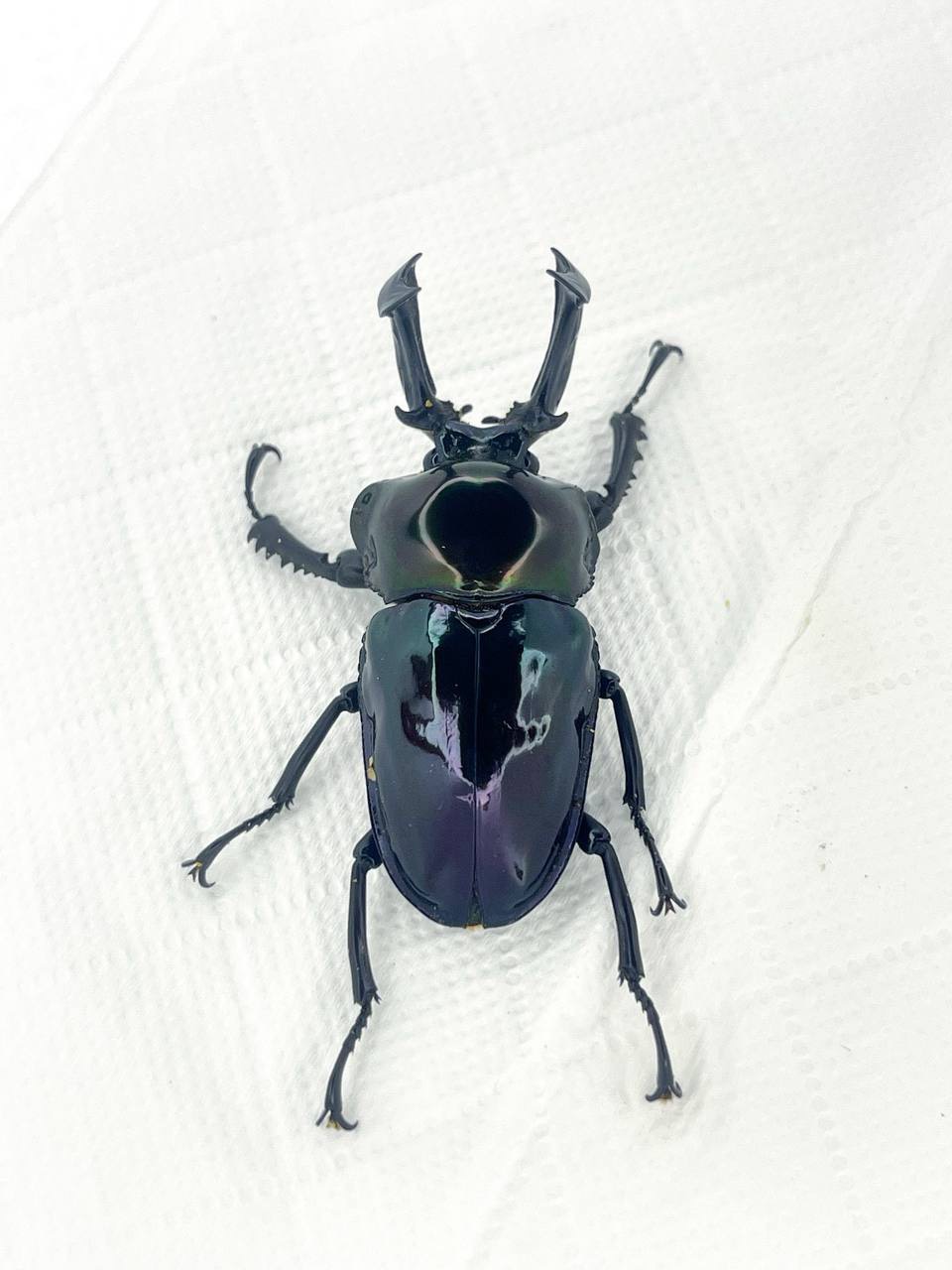
Navy Blue Purple Pikal — Thick Horn
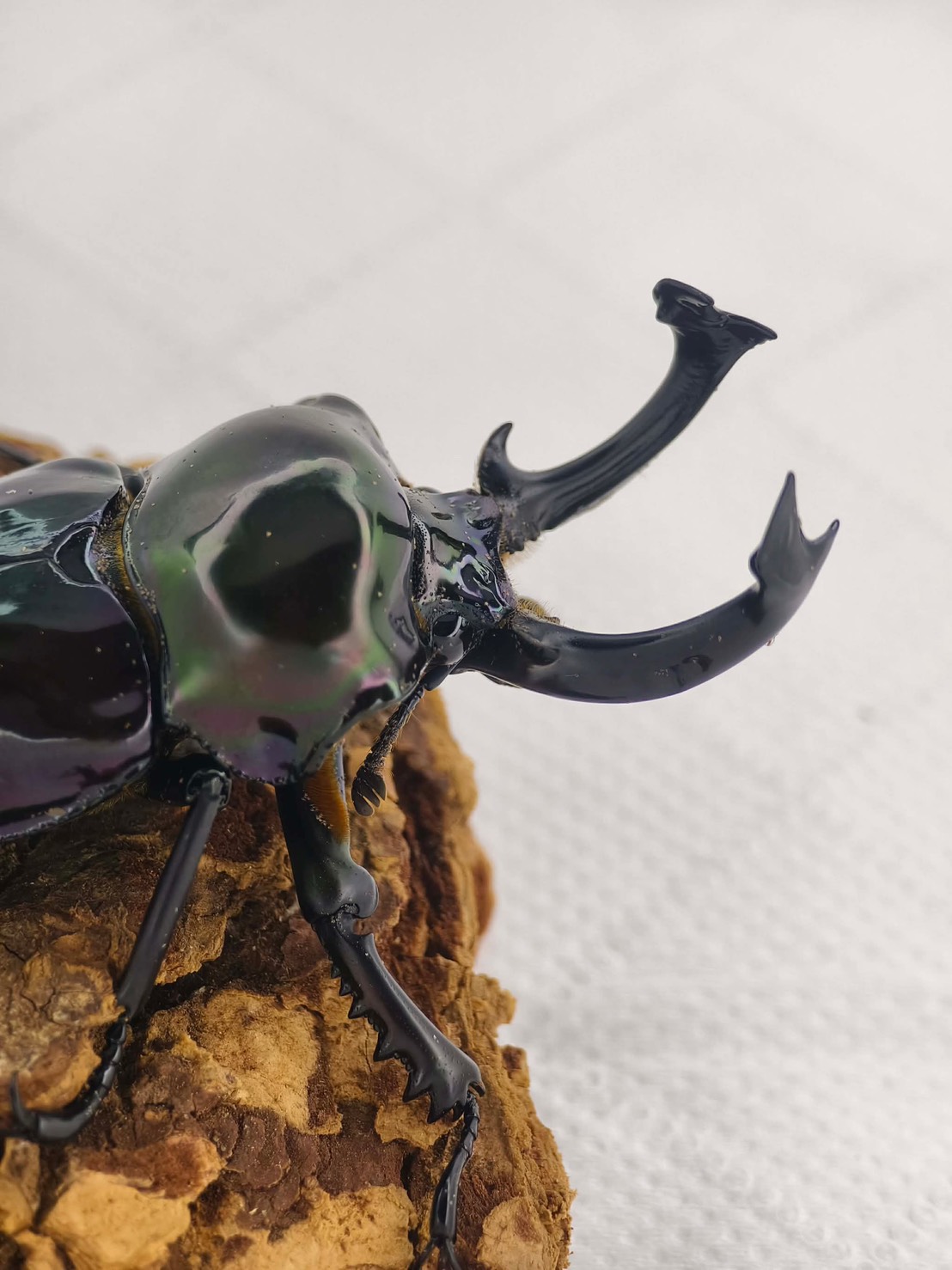
Thick Horn — Close Up
A special physical trait where the mandibles (horns) of the male beetle grow noticeably thicker than normal. Developed through selective breeding — breeders pick the thickest-horned males each generation and keep breeding them, gradually increasing horn thickness over multiple generations.
Interactive map showing how all color lines branch from Normal and connect to each other. Click any node to jump to its section.
Breeding within the same color line gives a very high percentage of offspring matching the parent color — even across different bloodlines. This is the safest approach.
Crossing different color lines (e.g., Red × Purple) will produce a high percentage of Normal offspring in F1. But if you continue breeding to CBF2-3, the F0 colors will reappear.
Male and female contribute equally to offspring color. Neither sex has more influence — bloodline quality matters far more than which parent is which sex.
2-3 generations to stabilize a color line (depends on bloodline compatibility). A line is considered starting to stabilize at 50-60% offspring matching target color.
Note: Multi-color morphs like Aurora may always produce ~3 variations even when stable.
Temperature, humidity, and substrate can shift colors slightly since rainbow stag beetle coloration is structural (not pigment-based). However, genetics and bloodline are by far the primary factors.
JRN BEETLE collection — color variations and special combinations.
Aurora Pikal
Aurora Pink Eyes
Aurora Pink Eyes ♂
Aurora Pink Eyes ♀
Blue Crest (Lapis)
Blue Crest Half Color
Navy Blue Purple
Navy Blue Purple Variations
Navy Blue Purple Pikal
NBP Pikal White Eyes
Blue Pikal
NBP Pikal Thick Horn
Thick Horn Close-up
Red
Red Pikal WE ♀
Super Red White Eyes
Super Red ♀
Super Green Pikal
Super Green Red Eyes
Glaze White Eyes
Purple Red Eyes
Normal White Eyes
Amber White Eyes